



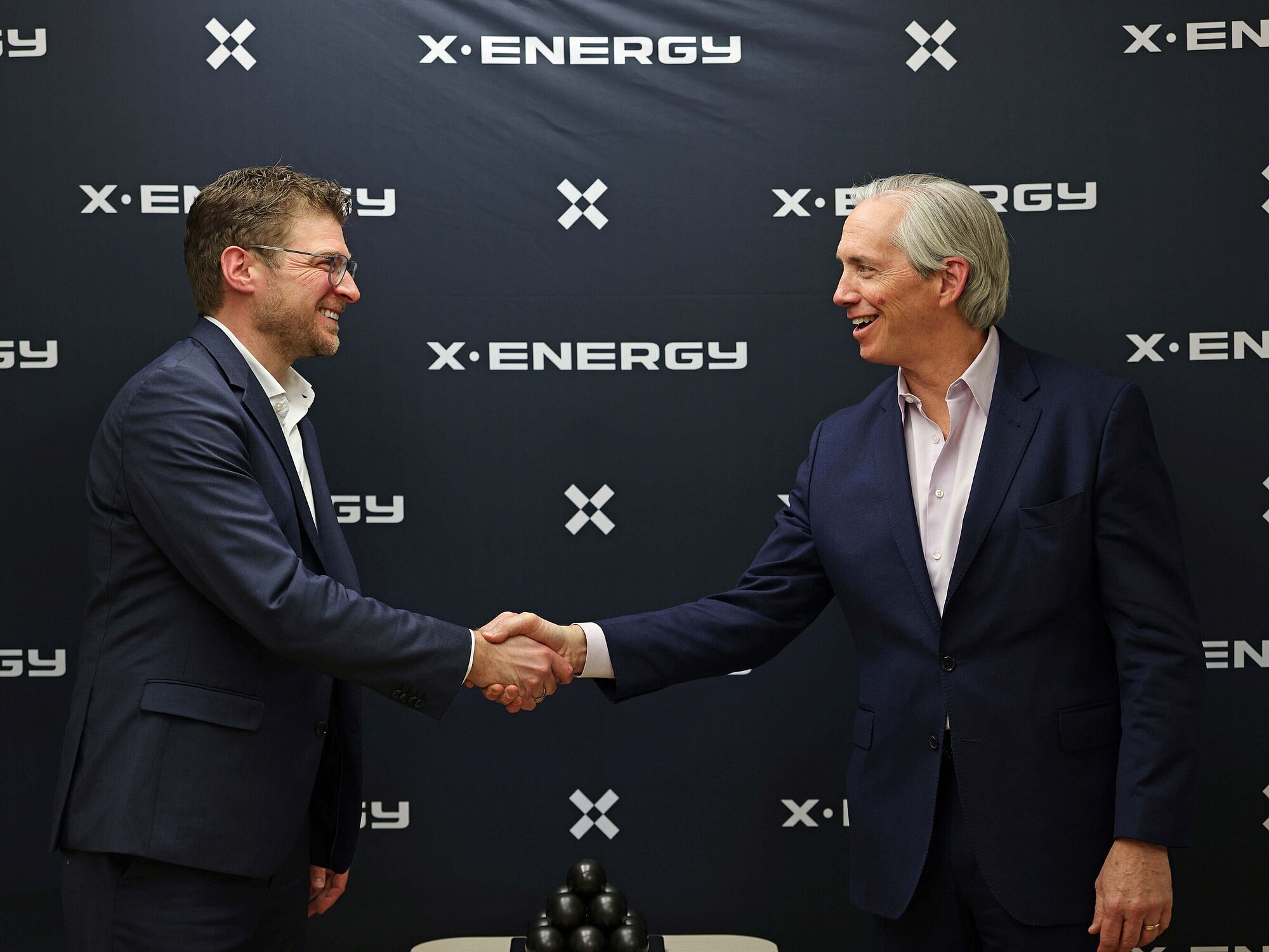
SGL Carbon LLC (“SGL Carbon”) has received an additional order for the supply of nuclear graphite from X-energy Reactor Company, LLC (“X-energy”) in accordance with the existing framework agreement. The order is valued at approximately 90 million USD. SGL Carbon will supply medium-grain isotropic graphite (“NBG-18”), a specialty material that is of central importance for X-energy’s Xe-100 high-temperature gas-cooled reactors.
This is the second order SGL Carbon has received from X-energy for commercial Small Modular Reactor (SMR) projects, and it underscores the close, long-term partnership between the two companies.
Andreas Klein, CEO of SGL Carbon SE, confirms: “We are very pleased that our high-performance graphite NBG-18 enables us to make an important contribution to securing X-energy’s supply chain and, thus, to the further commercialization of the Xe-100 reactors. Together with X-energy, we will expand our production capacity to meet the future demand for nuclear graphite for the Xe-100 reactors.”
In January 2026, SGL Carbon and X-energy had already announced the signing of a 10-year framework agreement and the first supply order for the delivery of graphite reactor components for the first commercial project by X-energy and Dow, Inc. in Seadrift, Texas. The first graphite components manufactured by SGL Carbon for this project have already been delivered to X-energy. Production of the newly ordered graphite billets will start at the end of 2026.
In August 2026, X-energy and SGL signed an agreement to jointly expand production capacity for nuclear graphite at SGL Carbon sites, expanding initial NBG-18 billet production at its site in Chedde (France), and machining capacity in St. Marys (U.S.).
“Bringing advanced nuclear to commercial-scale starts with proven suppliers, and their ability to work collaboratively across the development cycle to bring these components to production,” said Jesse Walker, Chief Supply Chain Officer at X-energy. “SGL is exactly that type of partner, working closely with our technical teams across qualification, prototyping, and now repeated commercial-scale production.”
